
🇨🇳 Zhangjiajie National Park (Avatar Mountains)
My highlight of China
I was really looking forward to coming to Zhangjiajie. It’s a national park that inspired the mountains in the film Avatar, and from photos, it looked incredible. Similarly to when I visited Tianmen Mountain, though, planning a trip here took some effort.
The national park is huge, and English advice for visiting it is limited online. I initially wanted to hike much of it before finding that it’s not something people usually do. Rather, the national park is set up in somewhat distinct areas, and you take buses in between, with additional hiking routes you can take if you’re up for it.
I ended up following this guide, with this one as a backup, and it worked out great. Both of the guides describe the same route for tackling the national park. I also had an up-to-date map that my hostel gave me, which came in handy, as some signage around the park is out of date.
Wulingyuan
I stayed in Wulinyguan, which is the closest to the main entrance of the national park (despite the park being called “Zhangjiajie”, Zhangjiajie is actually a 30-minute drive away). It was a little intense here, as there weren’t many foreign tourists at all (especially in the cheap places I stay and eat at). I’d get stared at a good bit, and people would come up to me to ask where I’m from and whip out English phrases they know like “what country?” and “how do you do?”. I’ve not met anyone more enthusiastic on my travels than a Chinese person saying “hello” to the first foreigner they’ve seen this week.
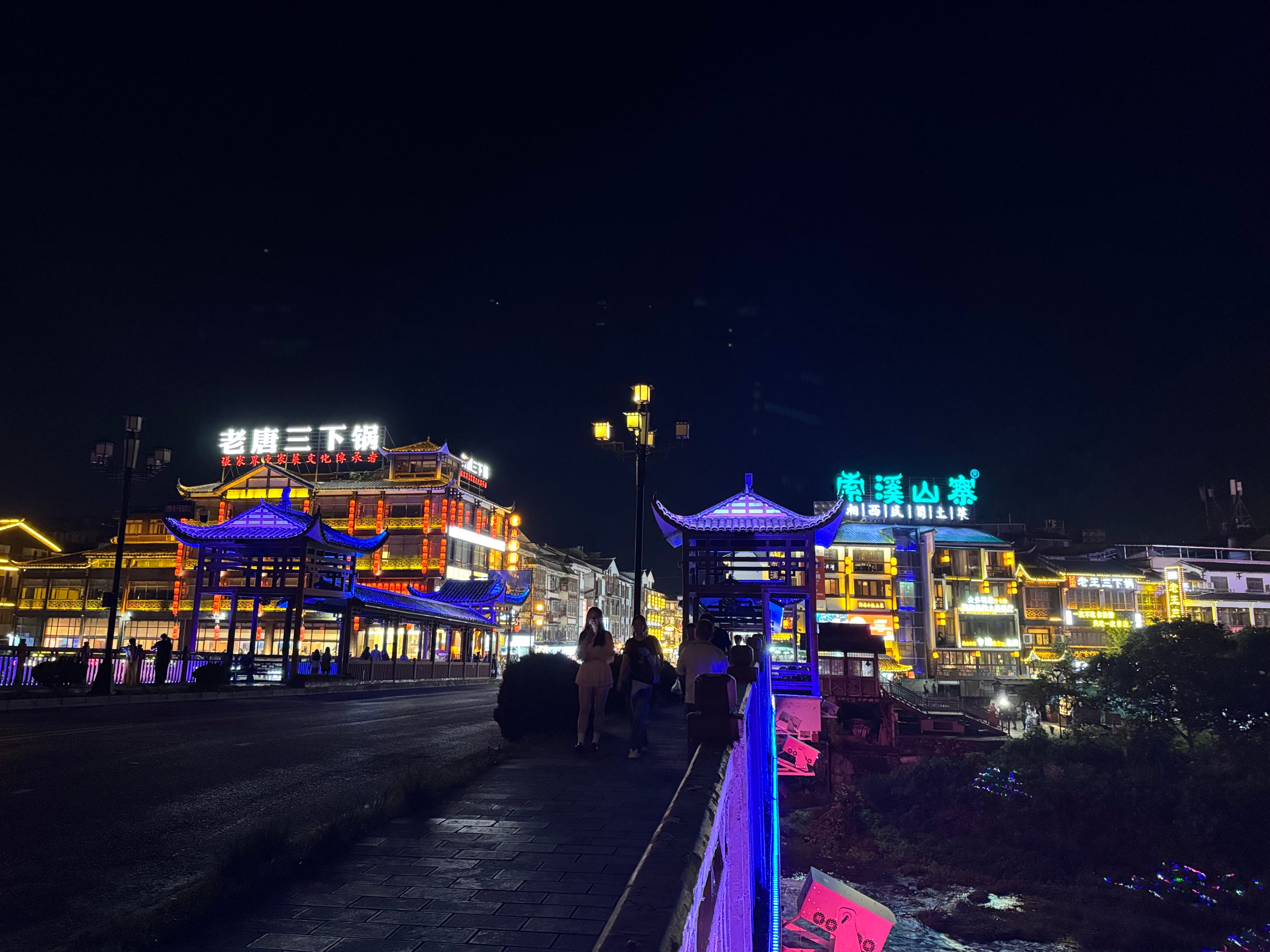
There was a touristy bit of the town which abided by China’s “tourist area” template - buildings built in a traditional style completely massacred with RGB LEDs at night, with shops selling usual mass-produced bric-a-brac. I didn’t spend much time here.
Day 1
I got in early to beat the tour groups, and I’m glad I did - for half of the day, I had the park entirely to myself. I started by taking the Bailong elevator. It’s the tallest outdoor elevator in the world, which excites a lot of people. It wasn’t that thrilling a ride, but it provided a pretty ceremonious introduction to the park’s sights.
The scenery here was unreal. The sandstone pillars are unlike anything I’ve seen, and their scale is impressive in itself. The way they formed is pretty fascinating, too, but I won’t bore you with a GCSE Geography lesson.
I walked around here from viewpoint to viewpoint, with the scenery changing in minor ways. Some pillars were longer, some thinner, some larger. It didn’t get old.
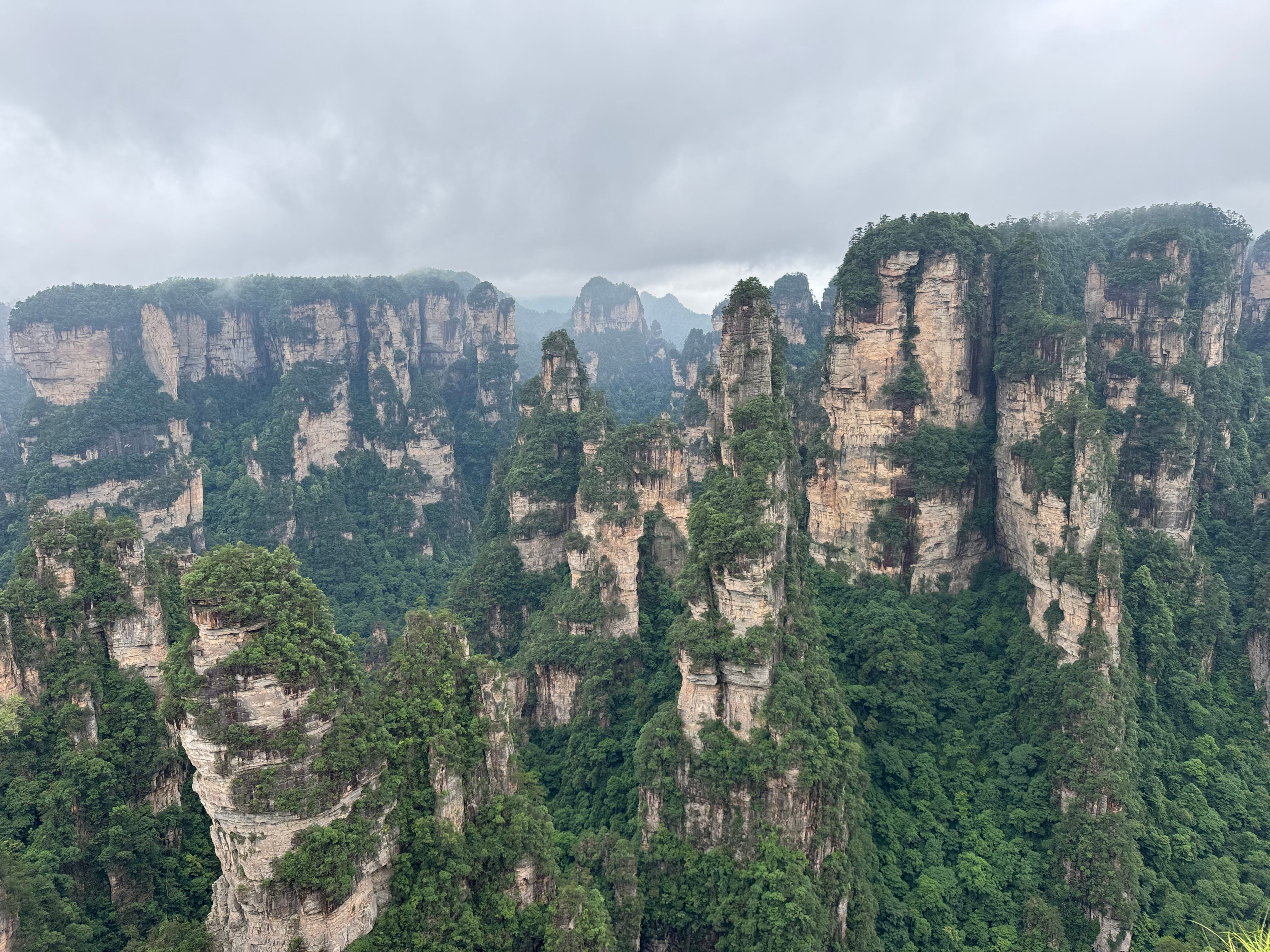
I followed the route in the guides linked above, which took me to a few other viewpoints. A highlight was taking a hike up to a mountain adorned in red Chinese ribbons for good luck. It was much less busy here, as I imagine most visitors aren’t bothered to hike, and it was well worth it.
I finished my day at “Tianzi Mountain”, which was one of the less impressive parts. It had a bunch of restaurants and shops, with a lot of easily accessible viewpoints around them. I finished the day at this point, setting me up with ample time for an evening of locals trying to sell me “massa-gees” and sticking menus in my face as I walk by restaurants with a belly already full of Chongqing noodles.
Day 2
I went to another part of the national park on the second day. It was much quieter here, and the area itself was much lower down, with the pillars towering above. I also really lucked out on the weather, and the visibility was pristine. It sort of felt like being somewhere fake, like a CGI film set. This day involved a lot more walking instead of taking cable cars from viewpoint to viewpoint, which I much preferred.
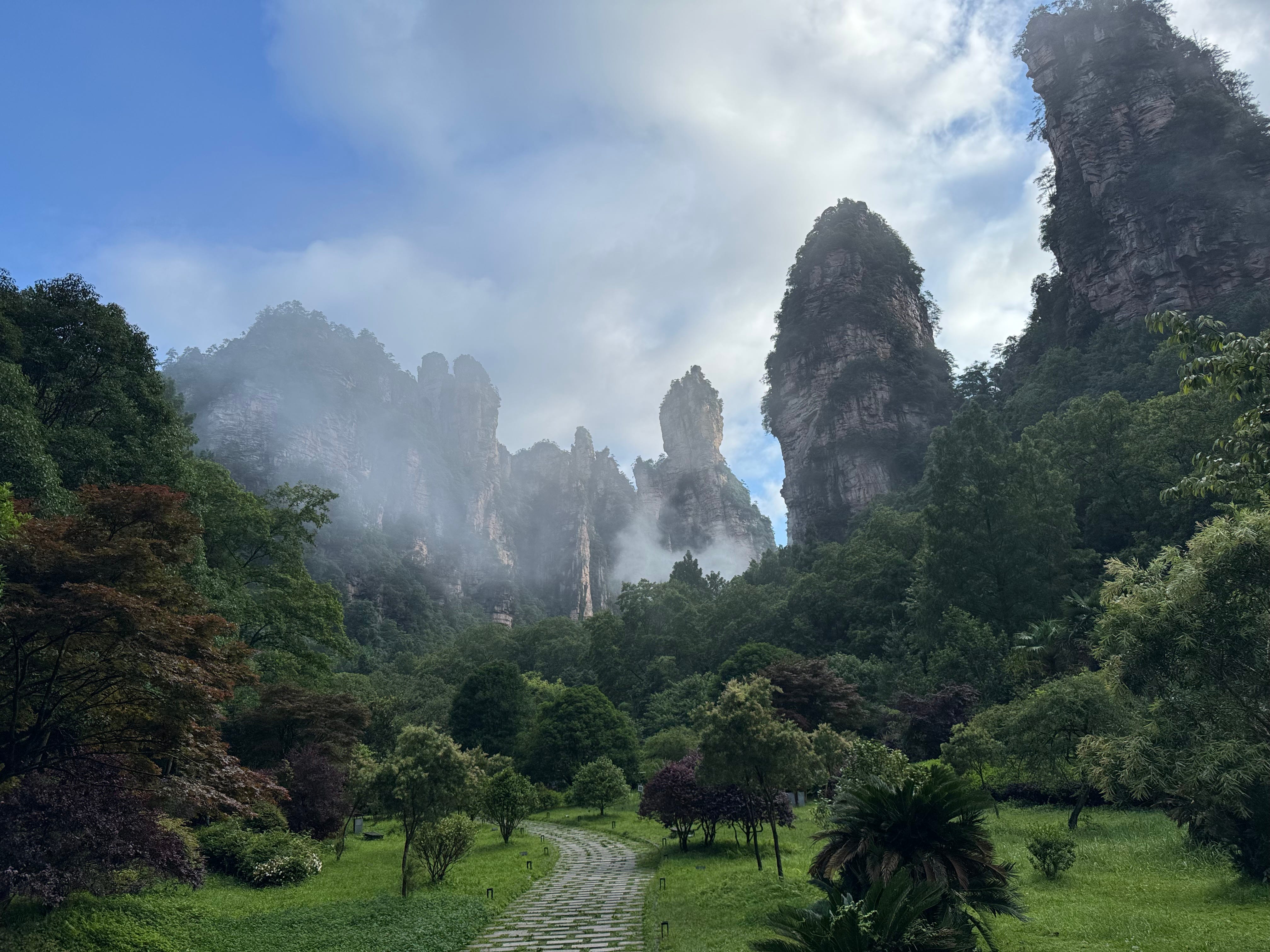
First, I went up to a village in the mountains here and did a loop around. The scenery here was like the day before, just with barely anybody around. I loved it.
A hike along a stream followed, which was a highlight of this day for me. There was a fog above the lake, making everything look hazy, and with the sun beaming down, sometimes I could see sunbeams. It felt like being in a dream.
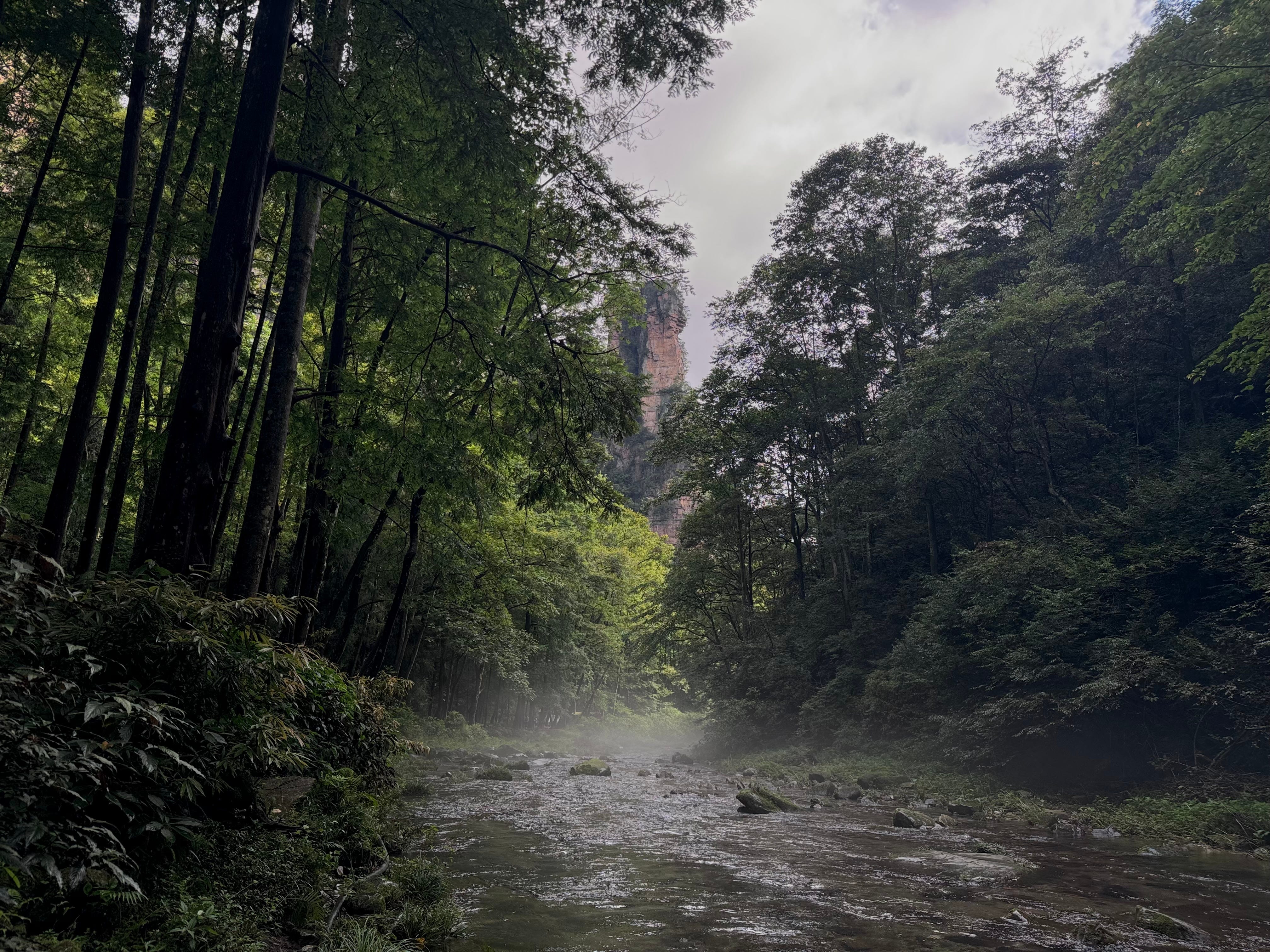
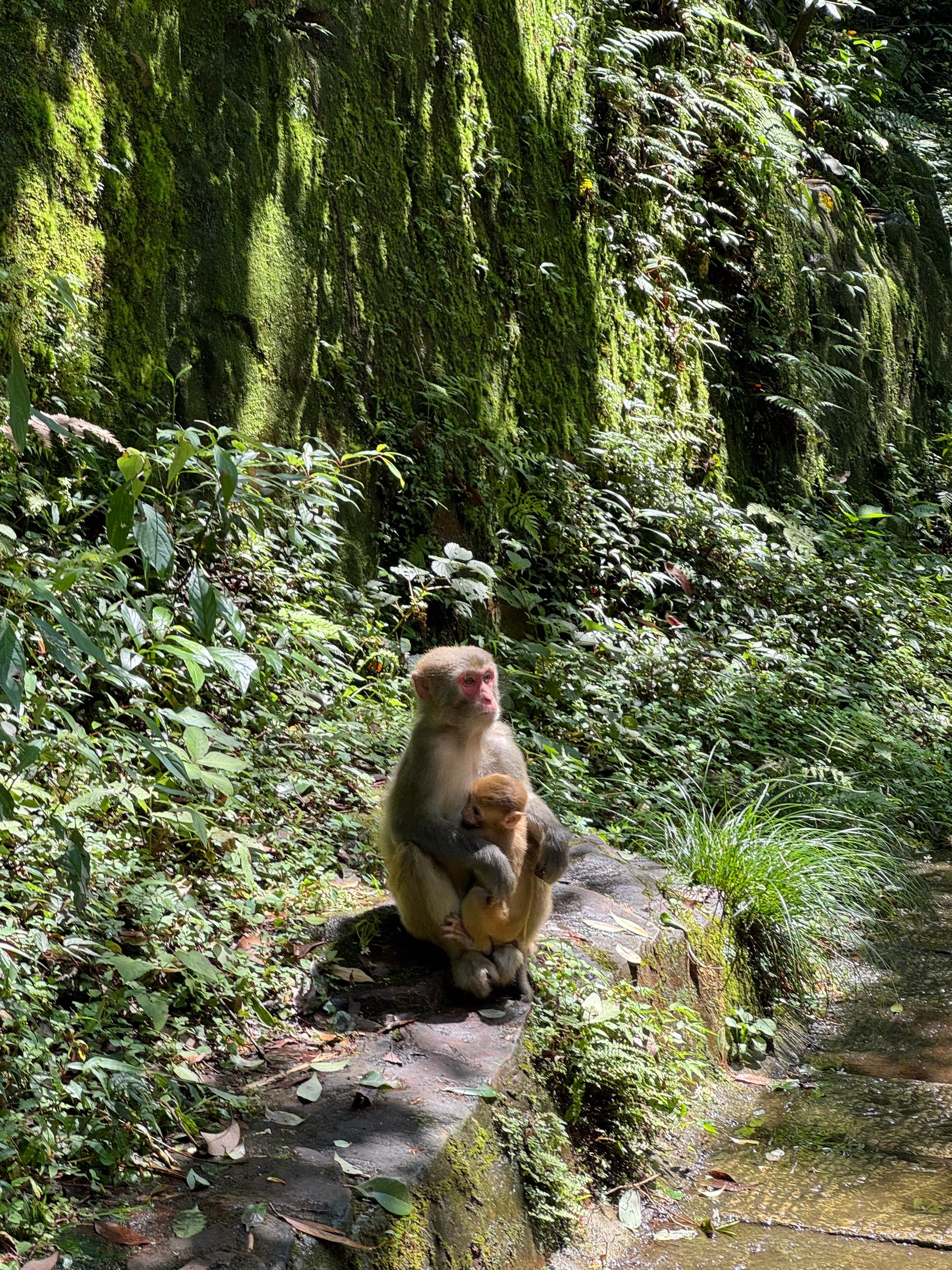
There was also a bunch of monkeys along the stream. Many seemed to be liking the attention, with a minority on high alert, screening for snack packets to snatch. There were a lot of baby monkeys with their mothers, with the mothers sometimes looking like they’re manhandling the babies around. I could watch them for hours.
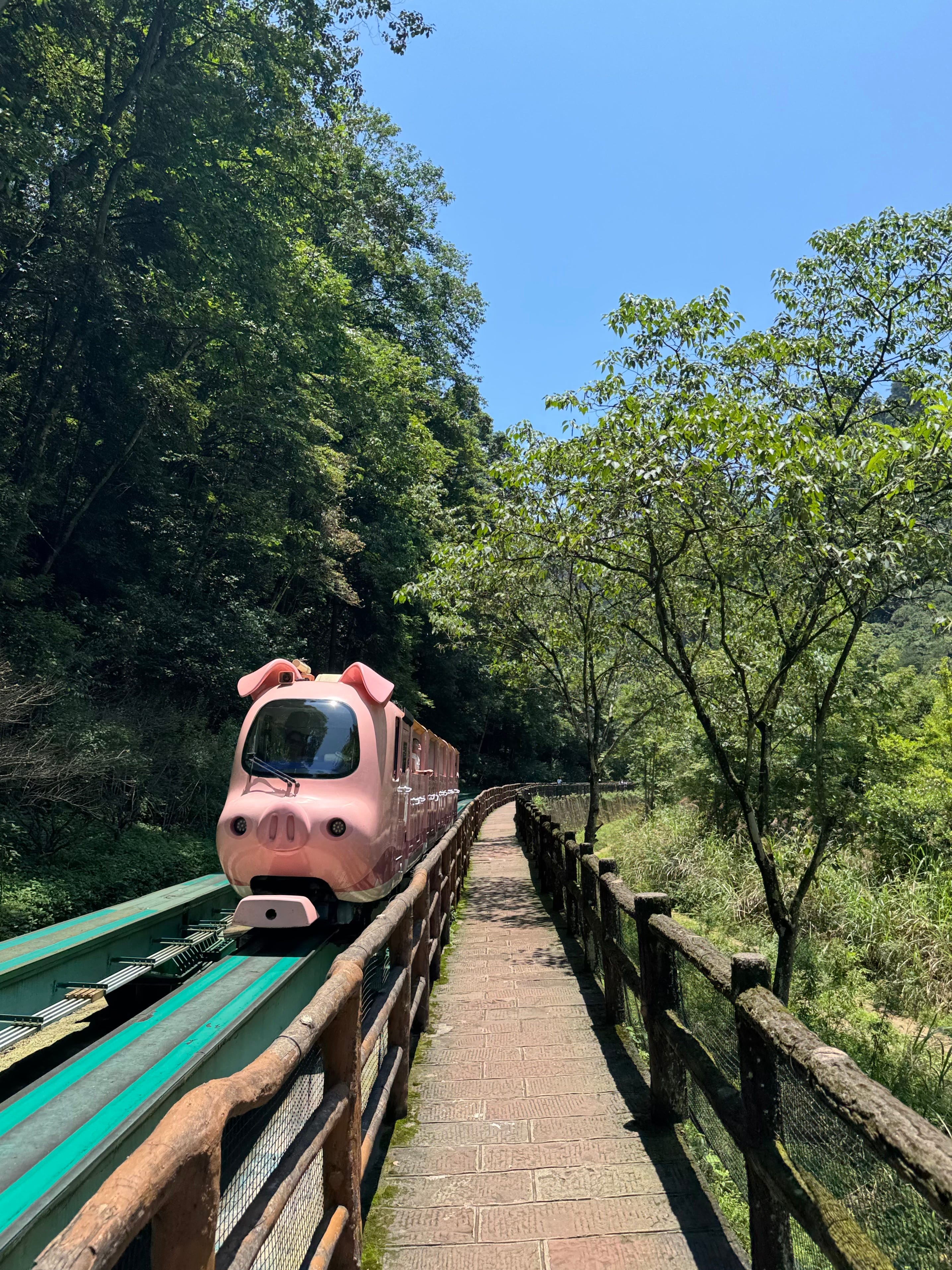
Finally, I walked alongside a railway with animal-themed carriages. The walk was lovely, and the animal trains going past were pretty whimsical. The route was narrow, though, which was a bit of a test of my patience, as it seemed that nobody conceived of the possibility of someone coming up in front of or behind them.
Over the time I’ve been in China, one of the biggest culture shocks has been people’s general lack of spatial awareness and consideration for others. It’s not as bad as India, but much worse than anywhere else I’ve been. I didn’t know if I was just becoming a bad person, so I looked it up, and it seems that many people share the sentiment. This manifests itself with people not letting others get off the subway first, people not respecting queues, or people standing bang in the middle of narrow staircases or alleyways. It seems like a societal norm, though, so I can’t blame them.
That wrapped up my stay at the national park, and I braced myself for another evening of getting asked by locals if I prefer Ronaldo or Messi, with me barely knowing who those people are.
Food
I’ve eaten a lot of what was on offer in China so far, but during my stay in Zhangjiajie I tried a few other specialities.
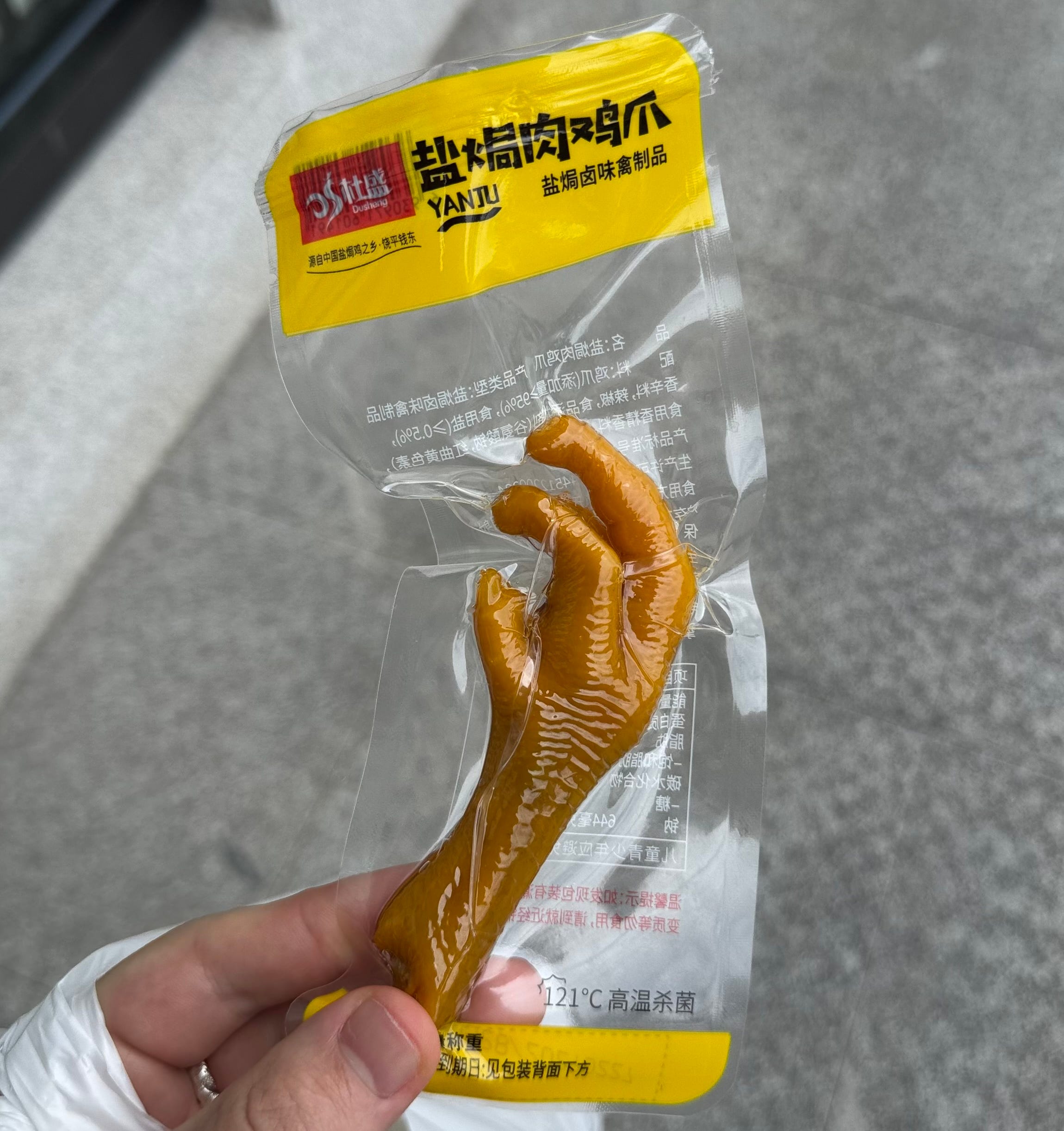
The first was chicken feet. These take a lot of effort to eat, as they mostly contain cartilage. You mostly end up eating chicken skin, which I’ve never been a fan of.
I’ve also had a few fun drinks in the park, including various teas. The biggest surprise has been that they all seem to have some solid bits in them, in the form of shredded jelly or boba. I’ve even had a yoghurt drink with popping pearls in it. I’m starting to miss not having something to chew along with my fun drinks now.
Zhangjiajie was great, and I think it’s worth coming to China just to visit it. No idea how James Cameron was inspired by it and somehow produced the shambles that is Avatar.